The reduction in KIT expression was confirmed in the cecum of En/En animals where its level was reduced to 11% compared to en/en rabbits.
MC is a genetic digestive condition that affects the function of a rabbit's gastrointestinal (GI) tract in rabbits with certain genes. The condition is progressive and each rabbit may be affected differently, showing varying degrees of symptoms at different life stages. Rarely, rabbits may develop MC from trauma, surgery, or injury (“acquired MC”).
These bunnies are predisposed to gut problems and have trouble absorbing essential nutrients from food. While some may remain healthy for the first few years of their lives, others will show symptoms from birth. Many MC rabbits will show worsening symptoms around the age of 3-5 years. Detecting and treating the condition at the onset of symptoms and as early in their lives as possible is essential to keeping them happy and healthy. However, humane euthanasia in severe cases may be recommended.
One of the most common ailments that affects MC rabbits is impaction of the gut due to slow motility. If left untreated, the colon can become severely distended and painful for the rabbit. These slowdowns can lead to serious gut infections and death. At some point in most MC rabbits' lives, daily oral medications will be necessary. This can include medications for managing pain, motility, and/or softening stool.
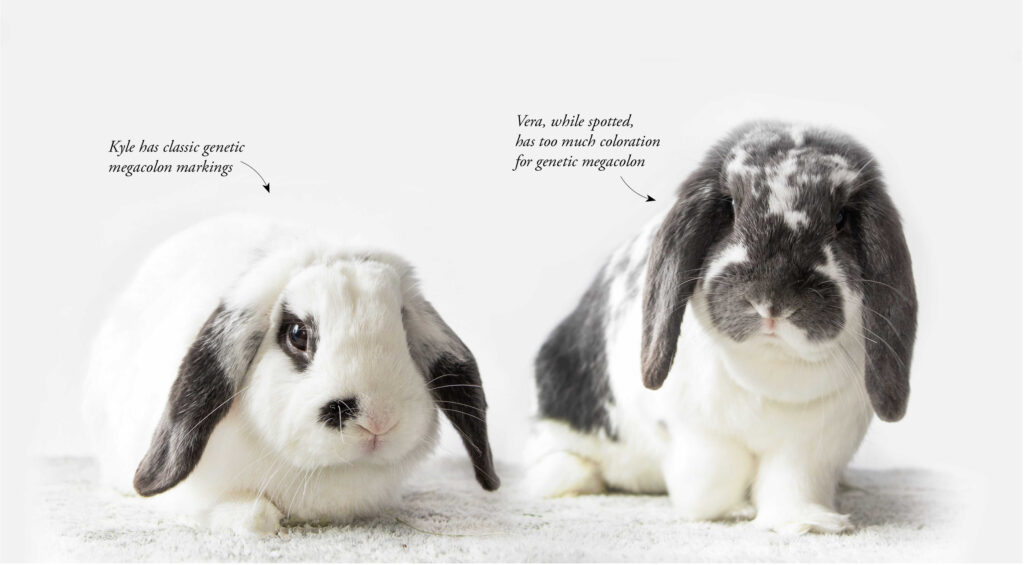
There are currently no tests that can diagnose MC. Instead, we look at coat coloration, fecal/cecal output, and ruling out other conditions that may present similar symptoms. Typically, genetic MC rabbits are mostly white with some spotting around the eyes, nose, ears, and spine. Not every rabbit with this coloration will have this condition.
A healthy rabbit's fecals are consistently spherical with little to no varying in size/shape, they are not overly small or large for the rabbit's size, and aren't too dry or too wet in consistency. You may have a megacolon rabbit if his typical fecal output is very large, misshapen, or varies in size. Sometimes fecals are overly dry, or conversely, they can be overly moist.
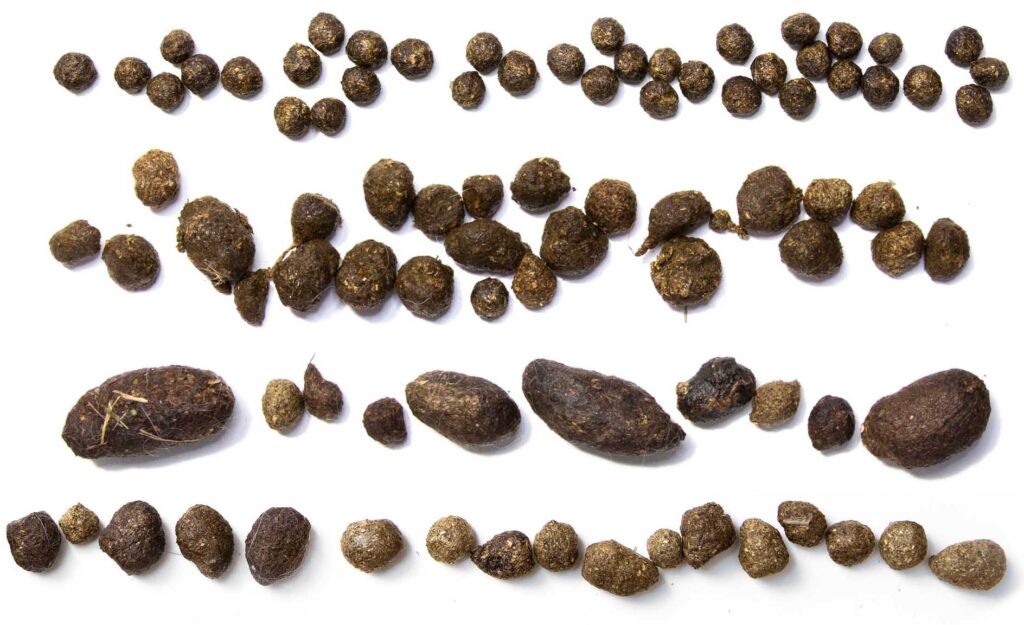
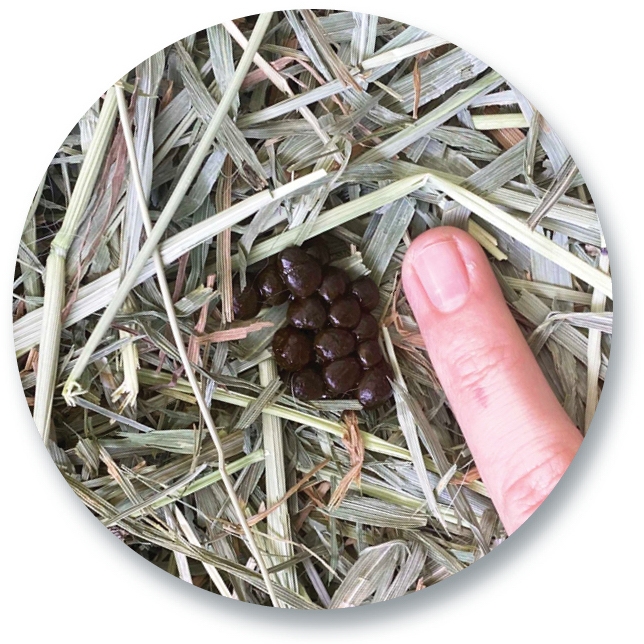
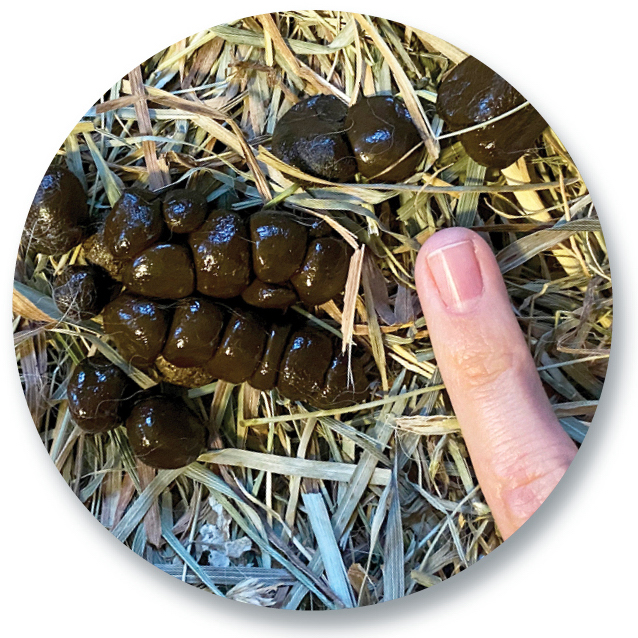
Cecotropes of a healthy rabbit come in shiny clusters that resemble the size, shape, and lustre of a blackberry. The cecotropes of an MC rabbit are overly large, and can be sausage-like in shape, and/or shiny in appearance and resemble tar.
Additional symptoms of MC: gut leakage, poor body condition with muscle wasting around the spine, potbelly, staining around the tail and back paws, weight loss with a voracious appetite.
Believe it or not, many veterinarians do not yet acknowledge MC as a condition in rabbits. Therefore, it is important to find a rabbit-savvy veterinarian who believes that megacolon exists in rabbits, or one who is willing to learn from vets who do. Once you have found a trusted veterinarian, work on a diet and in some cases, a medication plan, to keep your rabbit's MC symptoms as mild as possible. Each MC rabbit is different, so a diet and medication plan for one MC bunny may not work for another. Once you find a diet that works, stick to it! Only make modifications as needed. Take your MC rabbit for wellness exams 2x a year and bring along a sample of their fecal output which will help your veterinarian assess how they are doing.
Get to know the subtle signs before a serious GI crisis arises. Often, an MC rabbit's gut will begin to slow down and become backed up but the rabbit will continue to eat voraciously, and your first sign may be a decrease in fecal production. They may also show a decrease in appetite but won't refuse their favorite treats. It can be tough to notice the early stages of an episode, but the better you know your rabbit, the clearer it will be.
(May be useful to maintain a balance of bacteria in the gut. Please note its use and results are anecdotal.)