Baseline Routine Screening
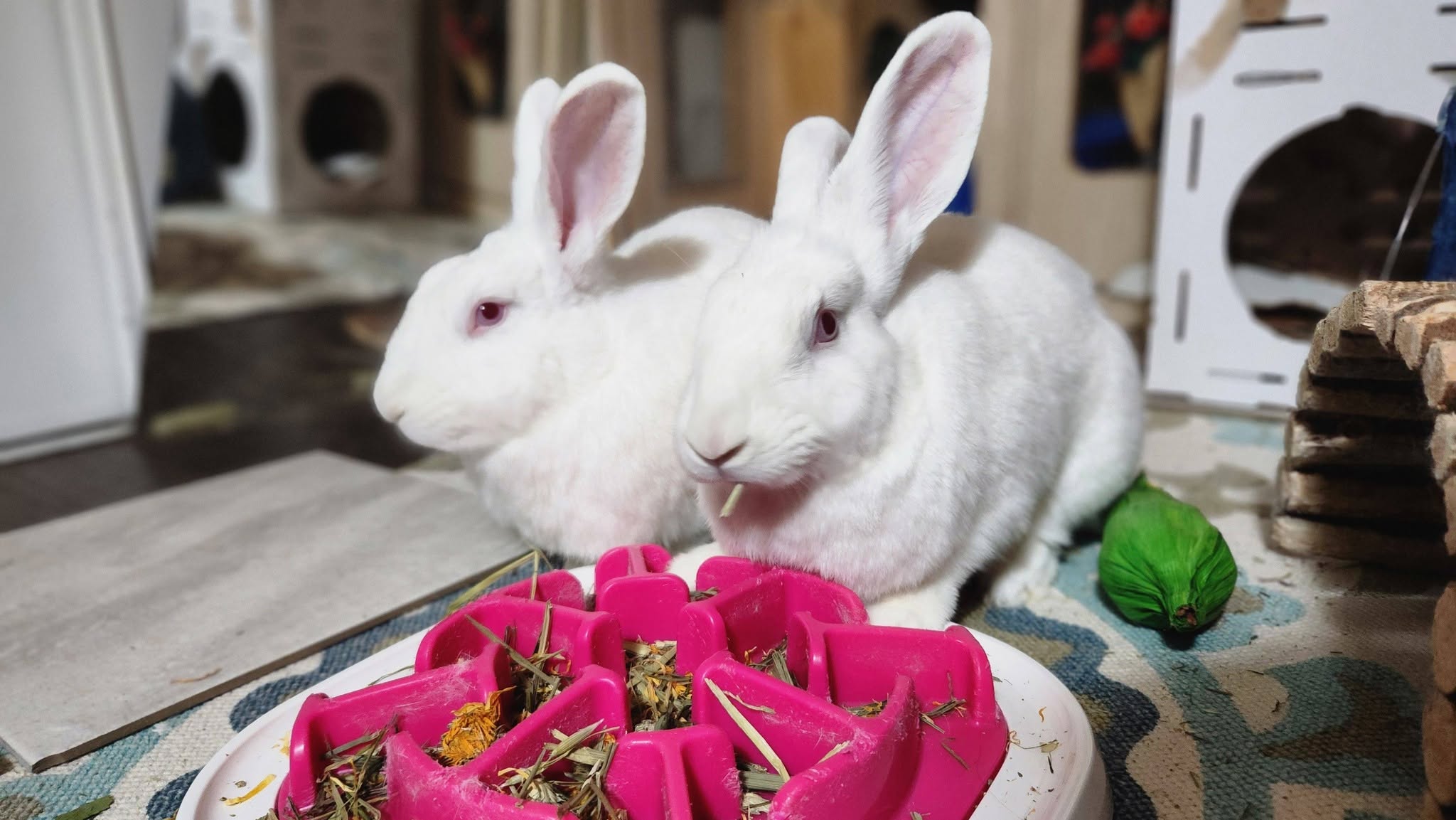
In 2023, I brought home two 1-year-old New Zealand White (NZW) sisters, Maple and Mochi. I am a big believer in routine wellness bloodwork while animals are healthy to establish a baseline and catch emerging issues early.
- April 2023: Mochi’s bloodwork was completely normal. Maple’s bloodwork was also normal except for a single liver value: Alkaline Phosphatase (ALP). While the standard reference range for healthy rabbits is 20–205 U/L, Maple tested at 311 U/L. Because digestive parasites are a common cause of isolated ALP spikes and were easily ruled out, we monitored her closely.
Escalation & Diagnostic Investigation
At her annual birthday checkup in March 2024, Mochi’s bloodwork was once again perfectly normal. Maple’s ALP, however, spiked dramatically to 663 U/L—more than triple the high end of the reference range.
Because all other liver values remained unremarkable, acute liver failure and liver torsion were ruled out. Furthermore, because Mochi lived in the exact same environment and shared food without any abnormal readings, parasites remained unlikely.
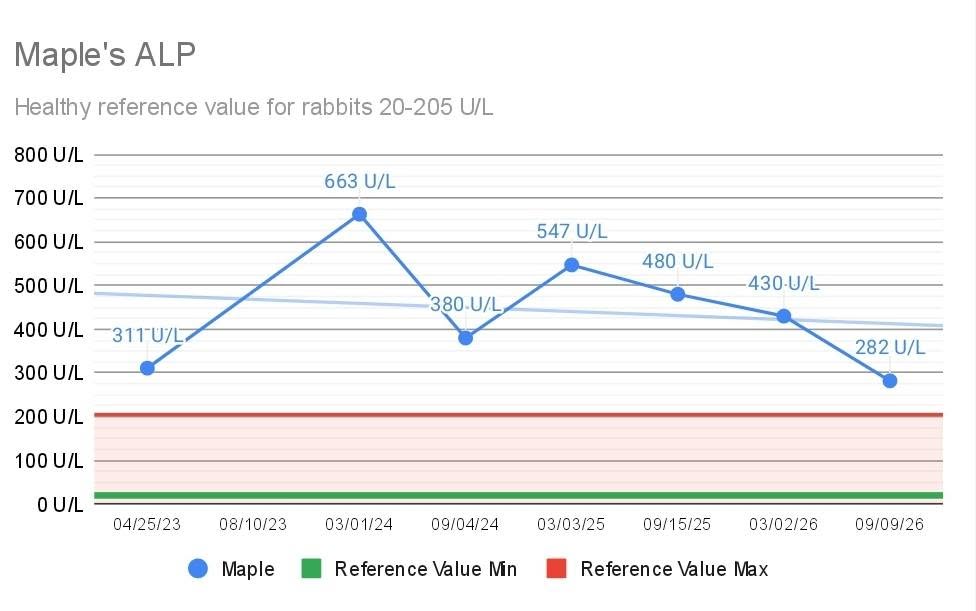
Veterinary literature on isolated ALP elevation in rabbits is extremely limited. We consulted a specialist for an abdominal ultrasound, which showed no tumors, structural abnormalities, or organ damage. Given her lack of clinical symptoms, we opted against an invasive liver biopsy in favor of semi-annual monitoring.
| Date | Maple's ALP Level | Reference Range | Status / Notes |
|---|---|---|---|
| April 2023 | 311 U/L | 20–205 U/L | Mild isolated elevation |
| March 2024 | 663 U/L | 20–205 U/L | Peak spike; ultrasound showed clear liver |
| Sept 2024 | 380 U/L | 20–205 U/L | Dropped unexpectedly |
| March 2025 | 547 U/L | 20–205 U/L | Rerose; presumed seasonal/cyclic pattern |
| Sept 2025 | 480 U/L | 20–205 U/L | Slight reduction |
| March 2026 | 430 U/L | 20–205 U/L | Pattern broken; did not spike as expected |
| Sept 2026 | 282 U/L | 20–205 U/L | Significant drop following plastic removal |
Connecting the Dots: The Habitual Plastic Nibbler
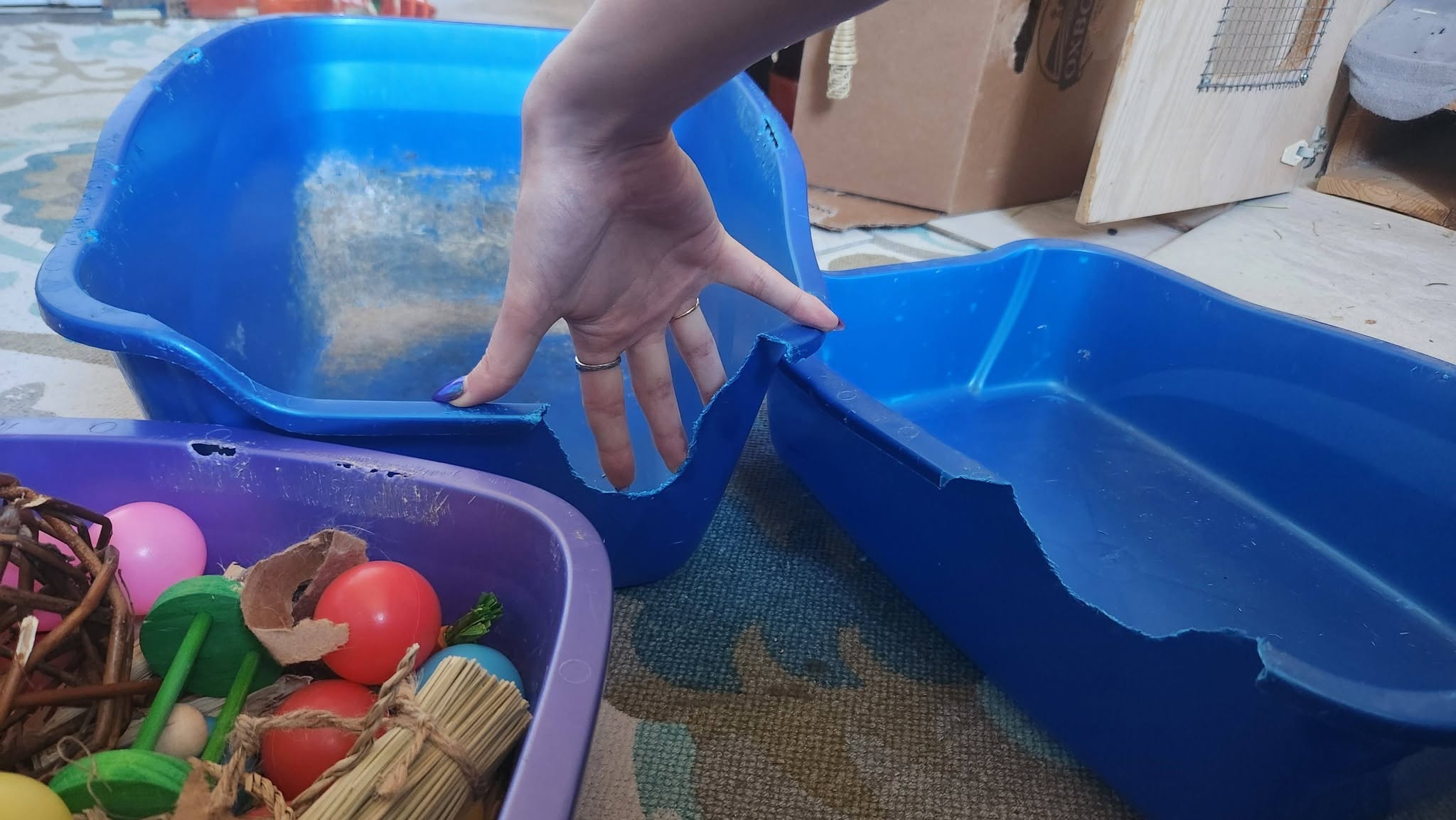
While discussing the frustrating lack of environmental explanations with our vet, I recalled one key behavioral difference between the two sisters: Maple habitually ingests plastic.
Unlike acute chewers who tear off large fragments risking instant GI stasis, Maple nibbled tiny pieces over extended periods—gnawing giant cutouts out of plastic litter boxes and chewing on plastic slow-feeder bowls left out overnight.
Husbandry Changes & Results
To address the issue, we made two major environmental adjustments:
- Replaced all plastic litter boxes with stainless steel litter boxes.
- Stopped leaving plastic slow-feeders out overnight.
By September 2026, following these changes, Maple’s ALP dropped to 282 U/L—her lowest level since initial baseline testing three years prior.
Summary & Community Takeaway
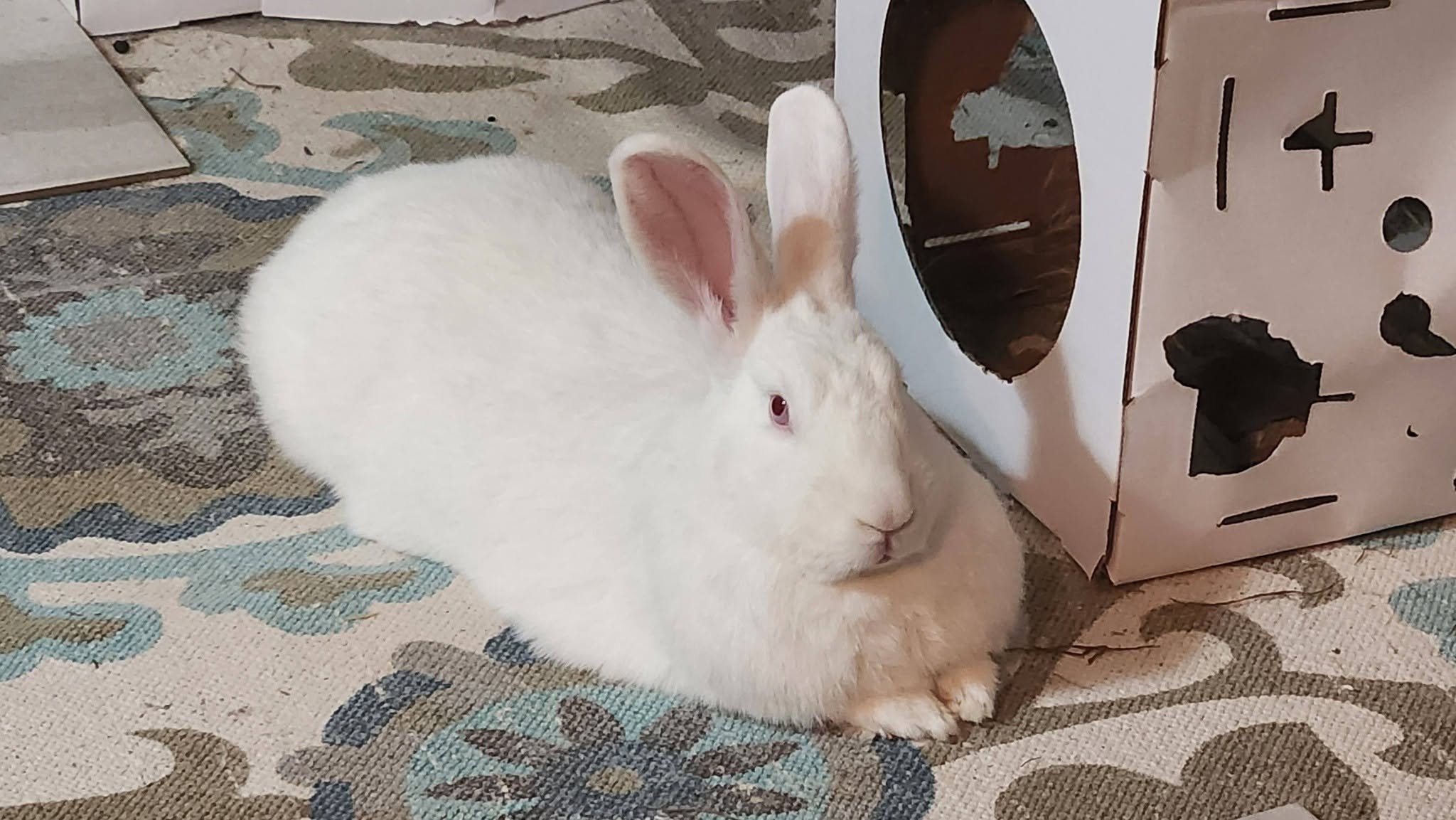
Due to the scarce documentation regarding isolated ALP spikes in rabbits, persistent low-level plastic toxicity/ingestion should be considered a potential differential diagnosis when clinical symptoms and structural abnormalities are absent. Transitioning to metal litter pans and removing plastic toys can help reduce metabolic stress on the liver.